


Arsenal Finally Break Free From Weak Label
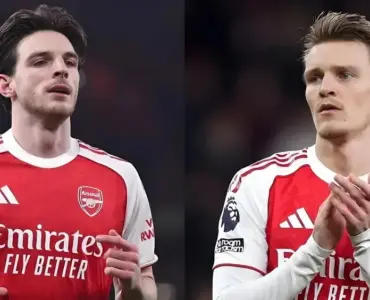 Red fireworks lit up the North London sky as Arsenal finally ended a 22-year wait for the Premier League title, and BD Cricket Live schedules shared attention with one of the club’s most emotional nights in modern history. Securing the championship before the final round already marked a historic achievement, yet an upcoming Champions League final against Paris Saint-Germain now gives Arsenal the chance to complete an unforgettable double-winning season. For a club once mocked as fragile, soft, and mentally weak, this triumph represents something far deeper than lifting a trophy.
To truly understand Arsenal’s long journey back to the top, it is necessary to return to 2004, when construction of the Emirates Stadium began. At that time, Arsene Wenger had just guided the club through the legendary unbeaten “Invincibles” season, with Thierry Henry, Patrick Vieira, and Robert Pires leading one of football’s greatest teams. However, building a modern 60,000-seat stadium came with a staggering financial burden of nearly £390 million, forcing Arsenal into a painful survival strategy for more than a decade.
The club repeatedly sold its biggest stars in order to maintain financial stability. Vieira left for Juventus in 2005, Henry joined Barcelona in 2007, Cesc Fabregas returned to Spain in 2011, and Robin van Persie moved to Manchester United in 2012. Each departure weakened the squad emotionally and competitively. Supporters joked bitterly about Arsenal becoming a club that “sold captains,” while rivals labeled them too weak to compete with Europe’s elite.
Yet that so-called weakness came from deliberate sacrifice rather than lack of ambition. Wenger repeatedly hinted that the Emirates Stadium had to be paid for through sporting compromise. Arsenal essentially exchanged short-term title challenges for long-term financial health. Between 2006 and 2015, the club finished inside the top four every season without truly threatening to win the league. That period of “stable mediocrity” was actually the maximum Arsenal could achieve while operating under strict financial limits.
Everything began changing when Mikel Arteta became manager in 2019 and Edu took over as sporting director in 2020. Instead of chasing success through endless spending, Arsenal focused on building a sustainable football structure. Expensive, underperforming veterans gradually left the squad, even when the club had to absorb financial losses to make those exits happen. Wage structures were rebuilt carefully to avoid dressing-room imbalance, while recruitment targeted young, high-intensity players capable of growing together over many years.
Martin Odegaard arrived at age 23, Declan Rice became the club’s record signing at 24, William Saliba established himself as a defensive leader early in his career, and Bukayo Saka emerged from the academy as the face of the new generation. Quietly, Arsenal built a young core with an average age below 24 years old. More importantly, that group could evolve together for the next five to eight seasons instead of forcing constant rebuilds every few years.
Removing old labels, however, required proof on the pitch. Arsenal’s three consecutive runner-up finishes before this title became part of that painful process. Outsiders focused only on failure, but internally the club recognized steady improvement. Goal difference increased, defensive numbers improved, and performances against direct rivals became stronger season after season.
Arteta also transformed Arsenal tactically. Once famous mainly for elegant possession football, the team evolved into one of the toughest defensive sides in the Premier League. Arsenal finished the season with the league’s best expected goals against record from open play, while the defensive stability provided by Saliba, Gabriel, Ben White, and Jurrien Timber became extraordinary. Even attacking players worked relentlessly without the ball. Saka’s defensive contribution and Odegaard’s pressing intensity perfectly reflected the mentality shift inside the squad.
At the same time, Arsenal became less flashy but far more ruthless. Set pieces turned into devastating weapons, producing nineteen league goals throughout the campaign. Against lower-ranked opponents, Arsenal won seventeen out of nineteen matches, demonstrating the cold efficiency usually associated with champions. The old “weak mentality” narrative slowly disappeared through disciplined victories rather than dramatic spectacles.
When the final whistle confirmed the title, emotional scenes swept across the Emirates Stadium. Many middle-aged supporters cried not only because Arsenal had become champions again, but because the moment carried memories of every painful chapter from the past two decades. Henry’s departure, Van Persie scoring against Arsenal in a Manchester United shirt, Wenger leaving without restoring league glory — those scars never truly disappeared.
Near the climax of another historic football season, BD Cricket Live fixtures continue sharing headlines with Arsenal’s remarkable transformation across Europe. Yet this title means far more than emotional redemption alone. Arsenal proved that success can still be achieved through patience, structure, intelligent recruitment, and long-term planning rather than unlimited spending. Twenty-two years ago, the club conquered England through brilliance and style. Today, Arsenal look different — harder, more disciplined, and far more resilient. In tearing away the old label of weakness, they may have built something even stronger than before.